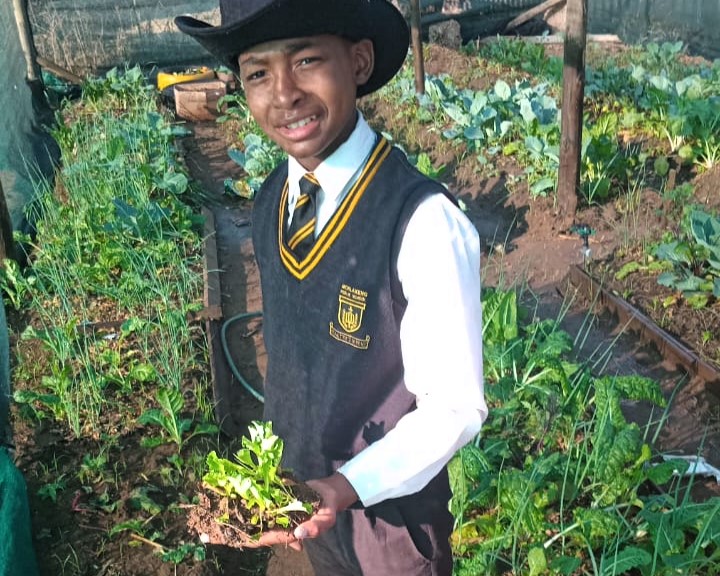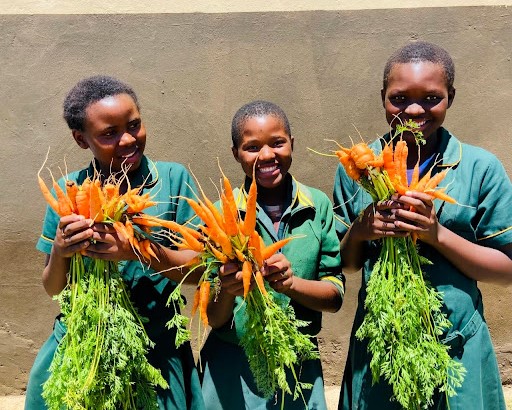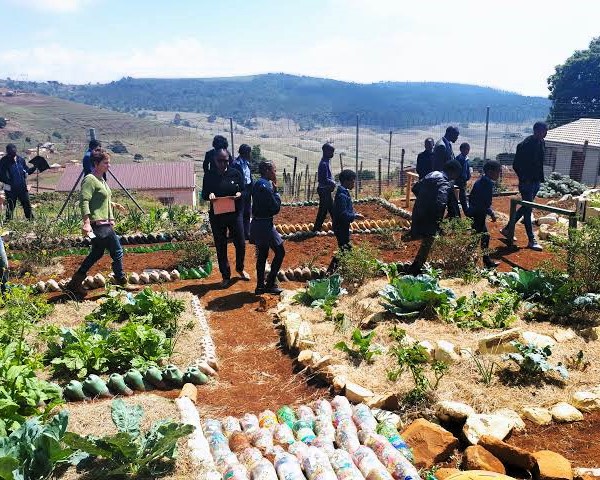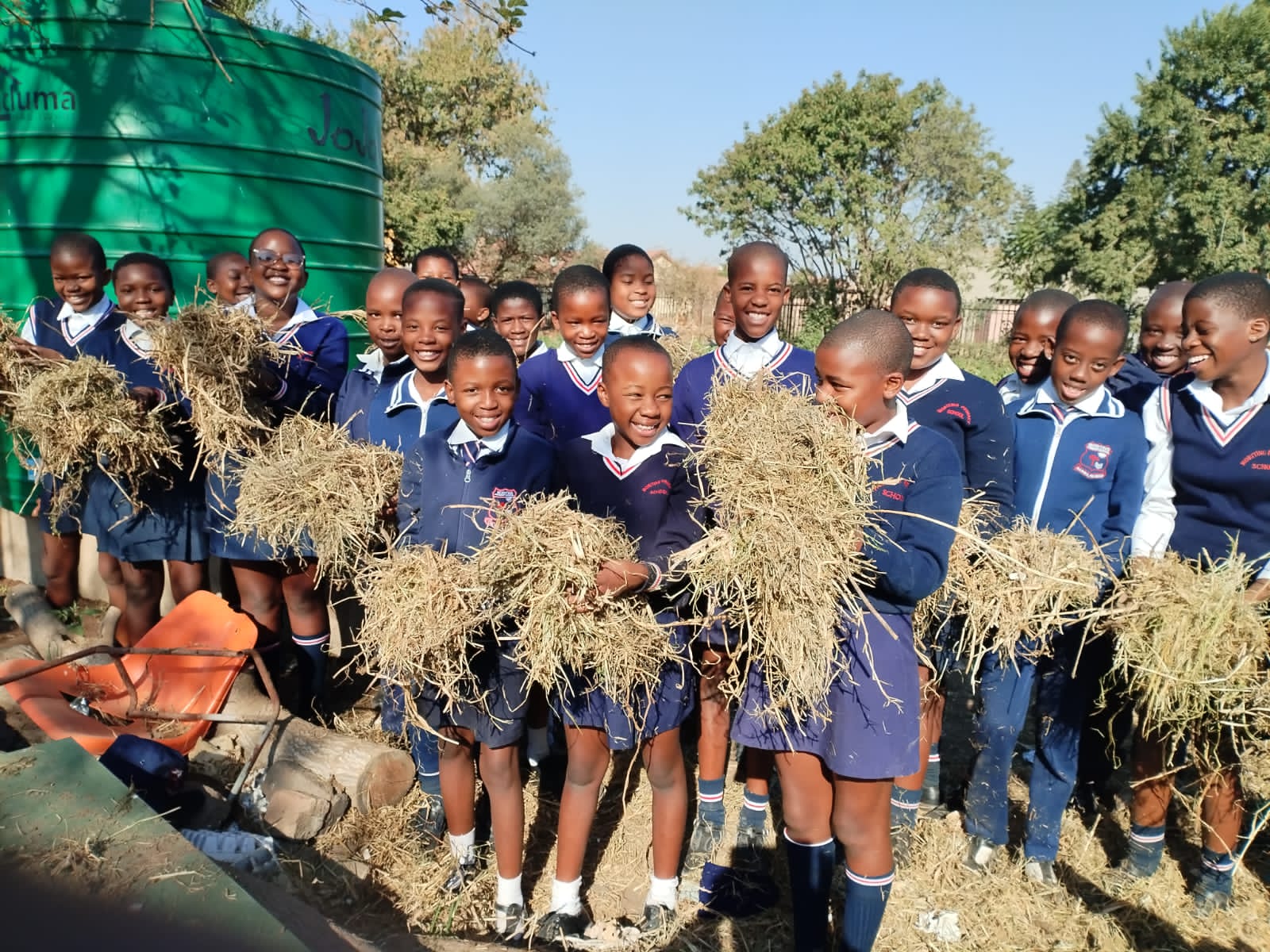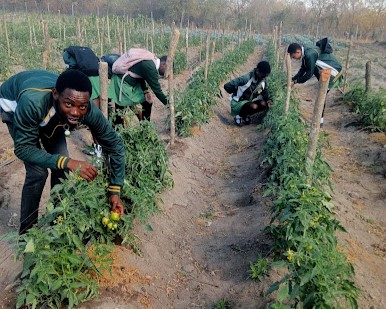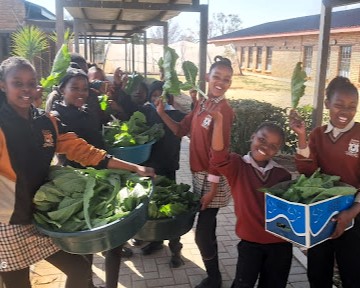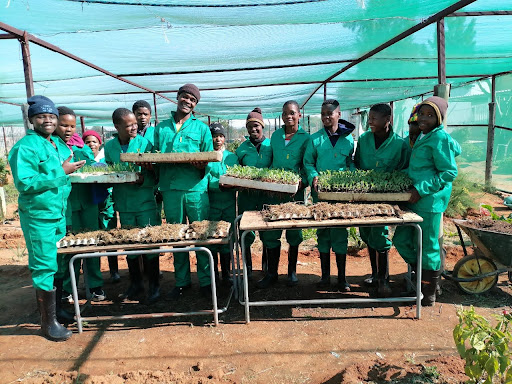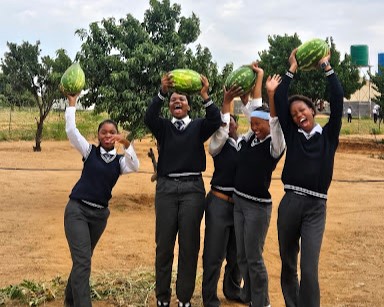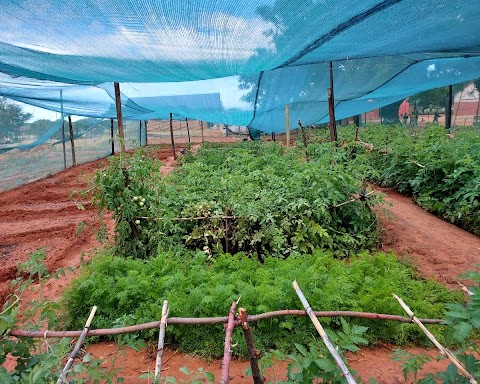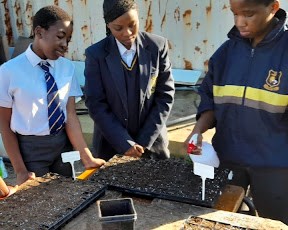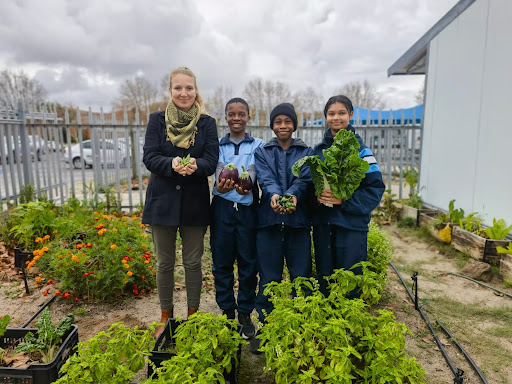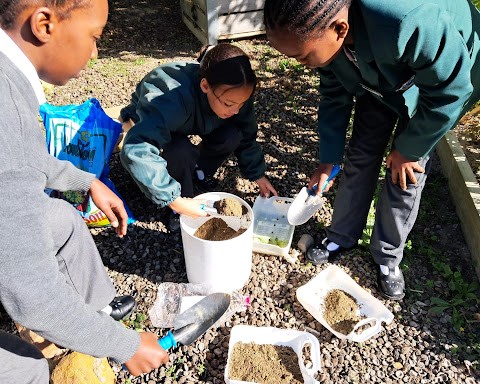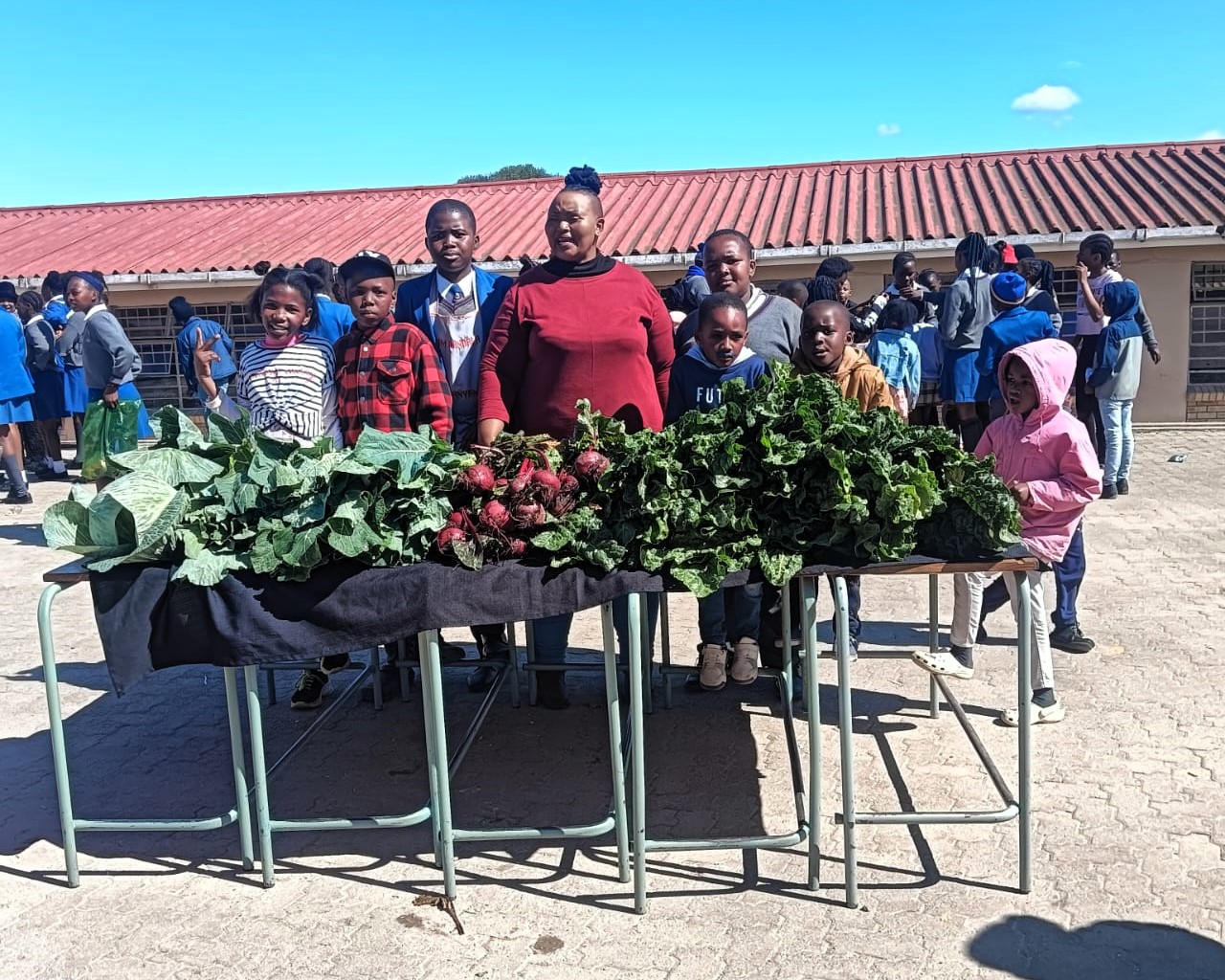
EduPlant School Competition finalists 2025

The story of Emafini Primary School is a vibrant narrative of renewal and growth, transforming a space with no prior garden into a Centre of Excellence. Since joining EduPlant and starting their food garden in 2018, this urban school, serving 1333 learners, including 10 vulnerable children, has cultivated a thriving 426 m² green hub right at the front of the campus.

This transformation is driven by a small, dedicated team of 12 learners and five educators, with one committed community member volunteering on weekends. They have embraced permaculture with creative resourcefulness, even using a hand-made tank to harvest precious rainwater, and implementing a chemical-free pest management strategy using a homemade spray of cayenne pepper, Epsom salt, and cow dung.

Emafini’s impact extends far beyond its fence line. As a mentor school, they have successfully supported two other institutions—Lungise High School and Sivuyiseni Primary—to start their own food gardens. The harvest not only supplements the school feeding scheme but also generates income used to buy essential garden supplies, securing the project’s self-sustainability.
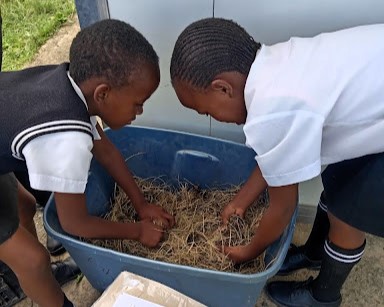
Zandise Primary School is a vivid illustration of tenacity, transforming a challenging rural environment into a life-giving ecosystem. Joining EduPlant in 2004, the school faced unfenced grounds and difficult soil, with the daily struggle of fetching water from a nearby river. Today, their 2,400 m² garden is a massive achievement, sustained by the installation of a borehole and a grey water system. This Centre of Excellence is nurtured by 20 learners, three educators, and four dedicated community volunteers who integrate gardening into core subjects like Natural Sciences and Mathematics.

Their permaculture mastery includes extensive composting, mulching, and planting pest-deterring herbs.The impact is profound, with harvests providing vital supplements for the school’s feeding scheme and local donations. Their success is transferable, as they’ve shared knowledge with two other institutions and motivated 10 parents and learners to start their own home gardens. Zandise Primary demonstrates that with long-term commitment, challenging circumstances can yield a rich harvest of food and knowledge.

Jamangile Senior Secondary School is a powerful testament to the benefits of organic farming and overcoming environmental adversity. Despite facing persistent water scarcity, this rural high school, which supports almost 700 learners successfully cultivated a thriving food garden starting in 2017.

The dedicated project team, comprising 20 learners and three educators who integrate permaculture into Agricultural Sciences, alongside two community volunteers, has mastered soil health. They enrich their loam soil with a compost heap, mulch, and by preparing beneficial microorganisms. Their approach to pest management is entirely chemical-free, utilising kraal manure to naturally deter threats.

While the 90 m² garden is modest, its impact is mighty. The produce is crucial for supplementing the school’s feeding scheme. The school actively shares its hard-won knowledge with Mabandla Primary School. Jamangile’s key highlight remains its commitment to teaching organic ways of farming and the critical skill of soil testing, ensuring its legacy of sustainability continues to grow.
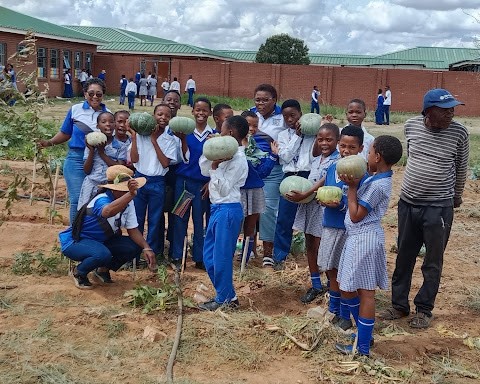
The remarkable Dr. M.G. Mngoma Public School started their garden and EduPlant journey only in 2024. This urban primary school, which supports a massive 1653 learners including 400 vulnerable children, has already achieved Centre of Excellence status. They swiftly transformed a patch of sandy, grassy soil into a productive 378 m² garden.

This achievement is powered by 51 learners, four educators, and two community volunteers who integrate gardening into core subjects like English and Natural Sciences. Their permaculture practices are smart and sustainable, utilising a borehole and grey water systems for conservation, and defending their crops with a chemical-free mix of water, garlic, soap, and chillies.

In its first year, the garden had produced an impressive 10 boxes of tomatoes and 7 boxes of eggplant, which supplemented the school’s feeding scheme. Crucially, Dr. M.G. Mngoma is a powerhouse of knowledge sharing, mentoring six other institutions and demonstrating financial sustainability by selling recycled materials to raise funds for garden tools.

The revival of Atang Primary School’s grounds into a thriving permaculture hub began in 2019 following an EduPlant workshop. This urban school, home to 1468 learners including 30 vulnerable children, faced the challenge of a neglected plot with rocky soil, a lack of infrastructure, and a persistent issue with weak water pressure. In response, they transformed their entire 400m² school grounds into a learning and food production space.

The project now utilises a robust water management system featuring a borehole, grey water system, and tanks for conservation. Their practices are fully organic, relying on a chemical-free chilli mixture for pest control and mastering complex techniques learned through the programme, such as worm farming, liquid manure production, and constructing various bed types.

The garden’s impact is quantifiable, regularly contributing around 10 kg of spinach, kale, and onion, supplementing the school feeding scheme. Their outreach is a key highlight, as they share knowledge and seeds with four community beneficiaries and have inspired numerous households to start home gardens, cementing Atang Primary as a true Centre of Excellence.

The spirit of perseverance defines Nozala Intermediate School’s participation in the EduPlant Programme. An urban institution, serving over 600 underresourced learners, started with poor soil and the challenge of having no fence which led to the occasional theft of beloved carrots! The school has now cultivated a robust 300 m² garden.

The permaculture project is a model of community support, driven by a small core of four learners and two educators, but significantly bolstered by nine community volunteers and support from the Community Work Programme (CWP). They have mastered sustainable practices, using grey water systems and mulch pits for conservation, and defending their harvest with a homemade, chemical-free spray of chilli, garlic, and Sunlight soap.

The garden is a tangible teaching tool, integrated into Natural Sciences and Mathematics lessons. It currently supplements the school’s feeding scheme and is a powerful symbol of how dedication can overcome hurdles to sow seeds of food security and educational enrichment.

The impressive progression of Tabola Primary School is one of resourcefulness and scaling permaculture to an astonishing level. Starting in 2012, this rural school, home to 958 learners including 15 vulnerable children, has cultivated an exceptionally large 25,000 m² garden that far surpasses the size of its school grounds. Their biggest challenge is persistent water scarcity.

To combat this, the school has become a master of water management, utilising JoJo tanks, a grey water system, a pond they created, and mulch pits to conserve every drop. The project is a major community effort, involving 20 learners, two educators, and 16 community volunteers.

Tabola’s impact is both massive and meticulous. Their impressive monthly harvests—including 30 heads of cabbage, 35 heads of pumpkin, and 25 eggplants—supplement the school feeding scheme and are sold to fund new tools and seeds. A key highlight is the transfer of this knowledge with twenty households starting their own gardens.

Dilopye Pre-Vocational School’s story is rooted in education, using permaculture to provide its 180 learners, including 25 vulnerable children, with practical Agricultural Studies skills. Since starting their garden in 2021, the 226 m² space has been an active learning laboratory.

They have become masters of soil health, managing a persistent challenge of summer waterlogging by diligently preparing kraal manure and liquid manure and utilising three compost heaps. Their success is most evident during the winter, where their hard work yields an abundant harvest.

Crucially, the garden operates as a self-sustaining enterprise. The produce supplements the school feeding scheme and is sold, with the generated funds reinvested directly into buying seeds and equipment.

This model of self-sufficiency has already inspired many community members, highlighting Dilopye’s role as a vital incubator of both food and financial literacy.

Since starting its garden in 2016, Philip Kushlick Special School, which serves over 380 learners, bravely tackled compact, sloped, and rocky land. The small, unfenced plot was ultimately transformed into an impressive 1,242 m² garden.

The garden is a crucial therapeutic and vocational hub, where 13 learners and three educators integrate permaculture into Agricultural Studies. They champion sustainable practices by harvesting rainwater in tanks and using a chemical-free approach with organic pest spray and pest-repelling herbs.

The school’s major highlight is its focus on agro-processing, creating herbal tea, cooling mint tea, and dried herbs, with the income generated used to buy food for the learners. As a Centre of Excellence, their knowledge sharing is widespread, mentoring three other institutions—Takalani Special School, AFM Garden Project, and GG Garden Project—earning its role as a leader in both special needs education and sustainability.

The success story of Molefe Mooke Primary School is one of profound regeneration, turning a twenty-year history of struggle into a self-sustaining permaculture project. This rural school, which serves 806 learners overcame a severe lack of resources—starting with dry, dusty soil and relying on water trucks or nearby homes for supply. They have since installed a borehole and implemented a grey water system to secure their future.

Though their current garden measures 52 m², its impact is immense. The project is a powerful engine for poverty alleviation and self-sufficiency. The harvests are crucial for supplementing the school feeding scheme and are sold, with profits used to buy new seedlings, creating a self-sustaining financial loop.

Furthermore, the school’s knowledge has radiated out, inspiring the foundations of home-based food gardens. Molefe Mooke Primary stands as a green testament to resilience, turning a resource deficit into a vibrant, educational asset.

Commitment and self-sustainability are exemplified in the rural Mohlakeng Primary School food garden. Since inception in 2021, this school, which educates 611 learners including 23 vulnerable children, has transformed an uneven, dry plot into a productive 198 m² green space. They have tackled challenges, like moles and produce theft, head-on with resilience and ingenuity.

The permaculture project is powered by a small but focused team who ensure the garden is cared for through early mornings and after-school work. They employ sustainable practices, including a grey water system and a completely chemical-free pest control using a mixture of lemon water, peri-peri cayenne pepper, and companion planting with garlic.

The garden is a hub for community engagement and provides crucial supplements to the school’s feeding scheme, harvesting approximately 20 bunches of leafy produce per month. Their highlight is their commitment to self-sustainability, including a clever value-adding product of chopped peri-peri for sale.

Nobanda Primary School Centre of Excellence is a shining example of how a school can evolve into a regional hub for sustainable agriculture. Since establishing its food garden in 2010, this rural school, which serves 1150 learners including 300 vulnerable children, successfully transitioned from conventional planting to permaculture principles. They overcame early challenges like open grazing by goats and chickens, and a culture of water wastage.

The 72 m² garden is now a dynamic learning space, engaging learners who integrate gardening into lessons like Mathematics and Geography. Their practices are inventive and chemical-free. They use a grey water system and practice water conservation through Geography lessons. They have even built a “Lizard hotel” to promote natural control.

As a leader in their community, Nobanda is part of the “Hlanganani” programme to share agricultural knowledge, and they actively mentor four other institutions, including a special school and a high school. The sale of produce buys new seeds, securing the project’s self-sufficiency.

Nkabini Full Service Primary School demonstrates an extraordinary commitment to sustainable food security, achieving massive success quickly after starting their garden in 2024. This rural school transformed a dry, stone-filled plot into a thriving 627.92 m² food source.

The project is an intensive community-wide effort, involving 100 learners and 12 educators who integrate gardening into core subjects like Maths, Natural Sciences, and Technology. A remarkable 30 community members also volunteer, ensuring the garden is cared for year-round. They utilise robust permaculture practices, including a pond, and a grey water system and a simple, chemical-free garlic spray for pest control.

The garden’s output is a lifeline, producing enough food to feed 500 learners, with surpluses sold to buy seedlings. Their knowledge sharing is potent, mentoring two institutions and actively promoting the “one home, one garden” initiative. Despite facing challenges like birds, mold, and local animals, Nkabini stands out for its deep commitment.

Kwa Ngubeni Primary School is a shining example of resourceful and sustainable farming in a rural setting. Since starting their food garden in 2014, this school successfully fenced and cultivated a 300 m² garden on what was previously fallow land.

The school is a master of water management, utilising a combination of municipal water, a borehole, rainwater, and even a natural spring. They conserve every drop using a grey water system, tanks, swales/trenches, and mulch pits. The project involves 20 learners and two educators who focus on organic farming, with pest control managed by a simple homemade garlic spray.

Despite the challenge of lacking funds to expand and provide stipends for helpers, the garden produces enough food to feed 20 learners through the school feeding scheme. Their dedication to outreach is evident through the knowledge they share with four institutions, including a local clinic and a crèche.

Beginning in 2002, Moriting Primary School has sustained long-term transformation. This peri-urban Centre of Excellence, which supports 1327 learners
including 600 vulnerable children, turned a grassy, unfenced space into a massive 1,813 m² food production hub. Despite early challenges with vandalism and misuse, they now boast an exemplary system.

Moriting is a master of resourceful water management, utilising a grey water system, tanks, and swales to conserve every drop. Their permaculture approach is deeply cultural, relying on a traditional remedy called Moshunkwane for chemical-free pest control. The garden is fully integrated into the curriculum, with profound impact.

The harvest supplements the school’s feeding scheme once a month and provides vital donations to learners in need. Furthermore, the school acts as a mentor, sharing its sustained approach and organic growing knowledge with two other institutions. This long-standing commitment ensures the project remains a powerful example of food security and holistic education.

St. Patrick Mathibela Primary School is a testament to resilience, transforming a rural plot into a vibrant 961 m² food garden despite the persistent challenge of lacking a reliable water source for irrigation. Since starting their garden in 2019, the school has focused on intensive soil health and water conservation. The project is a collaborative effort involving learners, educators and community volunteers who combat water scarcity, with water tanks, swales/trenches, and mulch pits for conservation. They enrich their loam soil with three compost heaps and organic manure.

Their key highlight from the EduPlant Programme is the mastery of advanced techniques like garden planning, intercropping, and pest management using mint and basil. The harvest provides crucial supplements to the school feeding scheme, is donated to a day care centre, and is sold to pay a garden worker’s stipend and buy new tools. This ensures that St. Patrick Mathibela Primary is not just growing food, but fostering self-sufficiency and valuable skills across its community.

The story of Toronto Primary School is one of incredible endurance and the transformation of a problem area into a dynamic learning environment, a project that remarkably began in 1986. This peri-urban school, which supports 1786 learners including 114 vulnerable children, successfully fenced and revived a piece of land that was once hard, dry, and used as a playground, cultivating a now productive 290 m² garden.

Despite facing ongoing challenges like water contamination and battling green worms on their trees, the school demonstrates excellent water management and promotes a healthy lifestyle to learners and community members. The project involves an impressive 106 learners and 12 educators, who integrate gardening into their Natural Science and Technology lessons.

The garden is a powerhouse of production and financial sustainability, harvesting notable amounts of produce like 87 green peppers, 102 tomatoes, and 292 bunches of spinach. The school has focused on value-adding by drying herbs for the feeding scheme and selling surplus to buy new equipment and fruit trees, ensuring the garden’s long-term future.

Although they inherited a garden with rich soil and good facilities in 2024, the school recognised the need for sustainability education and advanced farming skills. Their current garden, measuring approximately 1000 m², is now maximised for production, even as they identify its size as a key constraint.

The project is a collaborative learning experience for 20 learners and four educators, who integrate gardening into Life Skills and Natural Sciences. They demonstrate mastery of water management, using a grey water system and mulch pits for conservation. Their pest control is completely chemical-free, relying on intercropping with onions, chillies, and peppers.

A core highlight from their programme learning is the focus on agro-processing, particularly the freezing of vegetables to preserve them for future use. The produce is sold to teachers and the community to buy seeds and provide a stipend to the community caretaker, ensuring the project’s financial stability. Kobjaname’s commitment to sharing its knowledge on garden design, soil testing, and the culinary and medicinal uses of herbs is key to their success.

The permaculture journey at Morage Primary School is a testament to long-term dedication, beginning remarkably in 1993. Serving 675 learners in a rural community, this school has turned its initial sandy soil into a vast, fertile 1,950 m² food oasis.

Now a Centre of Excellence, Morage actively shares its hard-won knowledge by mentoring other institutions on the principles
of permaculture. The garden’s resilience is built on clever water management, utilising tanks, mulch pits, and a pond system for conservation. A small but dedicated team of 18 learners and two educators, supported by two community members, champion a completely chemical-free approach to pest control, using herbs, nematodes, and beneficial insects.

The impact is self-sustaining with the garden’s produce supplementing the school’s feeding scheme, and revenue from sales reinvested to buy seedlings and seeds. This model of environmental stewardship has also inspired parents to start their own home gardens, securing Morage Primary School’s legacy as a beacon of sustainability.

Deep-rooted agricultural expertise, cultivating not just food, but future farmers, is the foundation at Mahushe Agricultural School. Since establishing its garden in 1994, this rural high school, which educates 960 learners has transformed a piece of land with sandy soil into an impressive 1.5-hectare learning farm. Despite facing a chronic water shortage, the school excels by using permaculture as a core part of its Agricultural Management Practice lessons.

The project is a massive undertaking, involving 810 learners and six educators, with the invaluable support of 25 community members. They combat their sandy loam soil and water scarcity by using storage tanks, mulch pits, and a wide array of learned permaculture highlights, including worm culture, liquid fertiliser, green manure, and advanced bed design.

Their pest control is entirely chemical-free, relying on a homemade solution of chilli, garlic, and onions, alongside marigolds. Crucially, the school is a knowledge powerhouse, actively sharing its expertise with six other institutions and teaching resilience by focusing on drought-resistant crops. The sale of produce is directly reinvested to buy seeds and trellising ropes, ensuring this educational farm remains self-sustaining and continues to inspire.

Since starting their food garden in 2012, Magashule Lower Primary School has diligently cultivated a compact but highly productive 6 m² green space on a school ground of 50 m². Despite challenges like theft and an unexpectedly high water bill, their commitment to permaculture has never wavered.

The project is a group effort, strongly supported by five community members who volunteer their time. The school utilises smart water conservation through a borehole, a grey water system, and tanks. Their pest management is chemical-free, relying on simple but effective solutions like ash and a peri-peri mix.

The garden’s harvest supplements the school feeding scheme, and the proceeds from sales are reinvested to buy seedlings. A key highlight is the school’s role as a major knowledge-sharing hub, extending its support to 32 other organisations and proving that size is no barrier to achieving self-sufficiency and community-wide outreach.

Since beginning its food garden in 2005, Lugedlane Primary School, which educates 1145 learners including 368 vulnerable children, has transformed a piece of dry, bare land into a productive 225 m² garden. Despite the persistent challenge of water scarcity, they utilise a comprehensive system of a borehole, a grey water system, and tanks for conservation.

The project is an extraordinary integration of learning, engaging learners and educators who weave gardening activities into a wide range of subjects, from Maths and Geography to Natural Sciences and Life Skills.

The school champions organic farming, using a chemical-free homemade chilli spray to protect its crops.

The harvest is vital in supplementing the school feeding scheme, but a key highlight is the financial impact—the money generated from selling surplus produce is used to buy school uniforms for needy students.

The food garden at Alabama Primary School is an inspiring urban success story, transforming a difficult environment into a Centre of Excellence since attending an EduPlant workshop in
2010. This large urban school, serving 1380 learners including 500 vulnerable children, successfully tackled compact clay soil and the initial challenge of no nearby water supply.

The school now boasts a resilient 424 m² garden, powered by a dedicated team of eight learners and three educators, with support from five community members. They have become masters of water conservation, innovatively planting 2-litre bottles in the beds to mimic drip irrigation. The school intensely works on soil health, using six compost heaps that process all organic waste.

The garden is a crucial lifeline, providing enough organic food to supplement the school feeding scheme for about 150 learners. Furthermore, by advertising and selling their organic vegetables in the school newsletter, they generate funds to buy equipment and seedlings, ensuring the project’s financial sustainability. Alabama’s impact extends wide, highlighting the importance of healthy organic eating and care for the earth.

The long-standing journey of Tigane Primary School is a powerful example of maximising a small space for major community impact. Since starting their food garden in 2012, this peri-urban school, which serves 1038 learners including 53 vulnerable children, successfully transformed a hilly plot of sandy loam into a productive 90 m² garden. The garden operates as a key teaching resource, involving an impressive 200 learners and two educators who integrate gardening into Natural Science and Technology lessons. They conserve water resources through tanks and diligently maintaining their soil with two compost heaps and mulch. The harvests—which include spinach, onions, cabbage, and carrots—are vital, supplementing the school feeding scheme and providing care packages for learners in need.

The money generated from sales is reinvested to buy seedlings and compost, ensuring the project’s financial sustainability. A key highlight is the focus on technical skills learned through the EduPlant Programme, such as soil testing, seed bed preparation, and composting, all of which contribute to their goal of keeping the soil healthy for continuous food production.

Creating abundance for vulnerable learners while conquering the forces of climate change is at the heart of Temoso Special School’s story. Since starting their garden in 2012, this rural special school has transformed a non-producing plot into a vital 72.4 m² functional learning space. They continuously battle the extremes of droughts and heavy floods, which cause persistent soil erosion.

The project is maintained through the efforts of 21 learners and two educators and further supported by five community members and various external partners. They have become masters of water and pest management, utilising a borehole, a grey water system, and tanks for water, and employing ingenious chemical-free methods like Lizard hotels and organic tea for pests.

The garden’s impact is significant, producing approximately 50 kg of food per week to supplement the feeding scheme. The money from sales is reinvested to buy necessary resources like a green shade net. Temoso’s outreach is a highlight; sharing knowledge while donating surplus homemade compost to food gardens in the surrounding community.

Mfihlakalo Special School is a testament to turning hardship into productivity. Since starting its garden in 1999, this rural special school, which educates 173 learners including 56 vulnerable children, has bravely tackled a plot originally filled with rocks and sandy soil and lacking a proper fence. Today, they proudly cultivate a massive 1,050 m² food garden.

The project is an essential part of the curriculum, integrating gardening into Agricultural Studies. Despite the challenge of persistent sandy soil, they demonstrate exceptional resourcefulness, prioritising mulch pits for water conservation. Their pest control is completely chemical-free, using a homemade organic tea from garlic, pepper, and onion, alongside Marigold companion planting.

Mfihlakalo is a model of sustainability and recycling, selling materials for revenue and creatively reusing tins and 2-litre plastic bottles to plant strawberries. The harvest is crucial, supplementing the school feeding scheme, and the money generated from sales is used to buy seeds and tools. Their outreach includes sharing knowledge and seeds with two other primary schools, cementing their status as a dedicated Centre of Excellence that champions worm farming, mulching, and organic pest control.

Conquering the harsh Northern Cape climate is no easy feat, but Segwaneng Primary School has created an oasis of community resilience. Since joining the EduPlant programme in 2018, this rural school, which serves 174 learners and 30 vulnerable children, successfully transformed a dry, sandy, and overgrown plot into a thriving 600 m² garden.

The project is a true community hub, with all 174 learners and eight educators participating in its success. Crucially, 30 community members volunteer their time, ensuring year-round care. They are masters of conservation, using a borehole and storage tanks, a grey water system, and mulch pits to battle the extreme heat and dry periods. Their chemical-free pest control is brilliant, featuring chilli-garlic spray and shelters for lizards to act as natural predators.

The garden’s harvest not only supplements the school feeding scheme but also provides value-added products like pickled pumpkins and beans. The funds generated were used to buy a new school gate and a spare borehole pump for continuous water security, even enabling them to purchase food for learners during funding delays.

Moedi Secondary School’s enduring journey exemplifies true commitment to agricultural education and food security since starting its garden in 2007. This rural intermediate school, which serves 386 learners including 23 vulnerable children, transformed a grassy, fenced area into an expansive 2,500 m² food garden. Despite their biggest challenge being a persistent pest problem, they rely on natural pesticides and integrated learning.

The garden is a dynamic learning space involving 65 learners and six educators. They are supported by a strong community force, with 25 volunteers and a dedicated caretaker. They utilise a borehole and tanks for water conservation in the dry Northern Cape.

The harvest provides crucial supplements to the school feeding scheme, producing about 10 kg of food per week. A key highlight is their focus on value-adding by making jam from their produce, with all sales revenue reinvested to buy seeds. Their outreach is a force for climate resilience, as they share knowledge and teach the community that planting food is essential to reduce the struggle against climate-related food shortages.

Achieving significant output just one year after starting their food garden in 2023, Simololang Primary School shows rapid progress and resilience in a rural setting. This school, which serves 514 learners including 50 vulnerable children, successfully converted a small, unprotected plot with infertile soil into a thriving 464 m² food garden. They now effectively combat early challenges like birds eating vegetables and persistent issues like theft.

The project is a hands-on learning hub for 20 learners and two educators. They demonstrate a strong commitment to sustainability, using a grey water system for water recycling, and teaching the community about reducing evaporation through mulching as part of their climate change projects.

Their yield of 50 kg of food per term that supplements the school feeding scheme is impactful. The funds generated from sales are strategically used to pay a caretaker in the garden during the holidays and purchase essential supplies, securing the project’s sustainability.

The story of Soneike High School is a remarkable international showcase for permaculture, transforming a piece of overgrown sandy soil into an impressive 3,000 m² Centre of Excellence since 2019. This urban high school, which serves 840 learners including 200 vulnerable children, goes beyond local outreach by hosting a unique cultural exchange program where German learners visit to plant seeds and learn from the garden.

The garden is a dynamic, high-level learning environment for subjects like Agricultural Sciences, Arts and Culture, and Natural Science. They have mastered a sophisticated, chemical-free pest management system using Bicarbonate of Soda, milk, and other bio-organisms, based on the philosophy that pests are a symptom of poor soil and environmental conditions.

They are equally advanced in water and financial sustainability, using a borehole, tanks, swales, and a reservoir for conservation. The school operates a seed bank and sells produce to buy inputs and educational materials for learners.

Despite challenges from moles, birds, and climate extremes, Soneike High School’s commitment to regenerative agriculture and no-till gardening positions it as a leader in international and local sustainability education.

Rapid and resourceful development has been key to transforming a challenging urban plot into a thriving educational garden at Rouxville Primary School. This urban school garden, inaugurated in 2024, faced an initial environment that was extremely sandy and covered in thorns, and completely lacked fertile soil or infrastructure.

They swiftly tackled this, cultivating a 125 m² garden that is sustained by a robust water management system consisteing of a borehole, tanks, swales/trenches, and mulch pits for water conservation. Their project is driven by 30 learners and two educators, who run an after-school environmental club and ensure the garden is cared for through shared duties over weekends.

Rouxville is proud to be a zero-waste school, diligently sorting all refuse for composting or repurposing. The school’s success in fundraising is a key highlight and revenue from produce sales is entirely reinvested to buy essential soil amendments like cocopeat and compost. Despite the challenge of extreme temperatures affecting their planting calendar, the school is already extending its impact, actively helping a local orphanage to start a vegetable garden and a chicken coop.

Botha’s Halte rural parimary school, serving 210 learners including 45 vulnerable children, has cultivated a 354.9 m² garden since 2022, through disciplined development. Establishing a functioning food garden on a former farm, produce is sustained by a borehole and tanks for water conservation.

The project is an active learning space and despite lacking external organisational support and community volunteers, the garden is reliably cared for over weekends and holidays by a dedicated learner who lives nearby.

The permaculture practices are focused on soil health, including two compost heaps and the use of worm tea as an amendment. Their pest control is chemical-free, relying on natural products and eggshells.

The produce is vital for supplementing the school feeding scheme, and the money generated from sales is used to buy seeds and is issued to the participating learners, creating a powerful incentive for continued involvement and self-sufficiency.

EduPlant® is owned and managed by Food & Trees for Africa.

EduPlant Partners